Lifting Heavy Things Is the Bone Insurance Nobody Sold You
9 min read
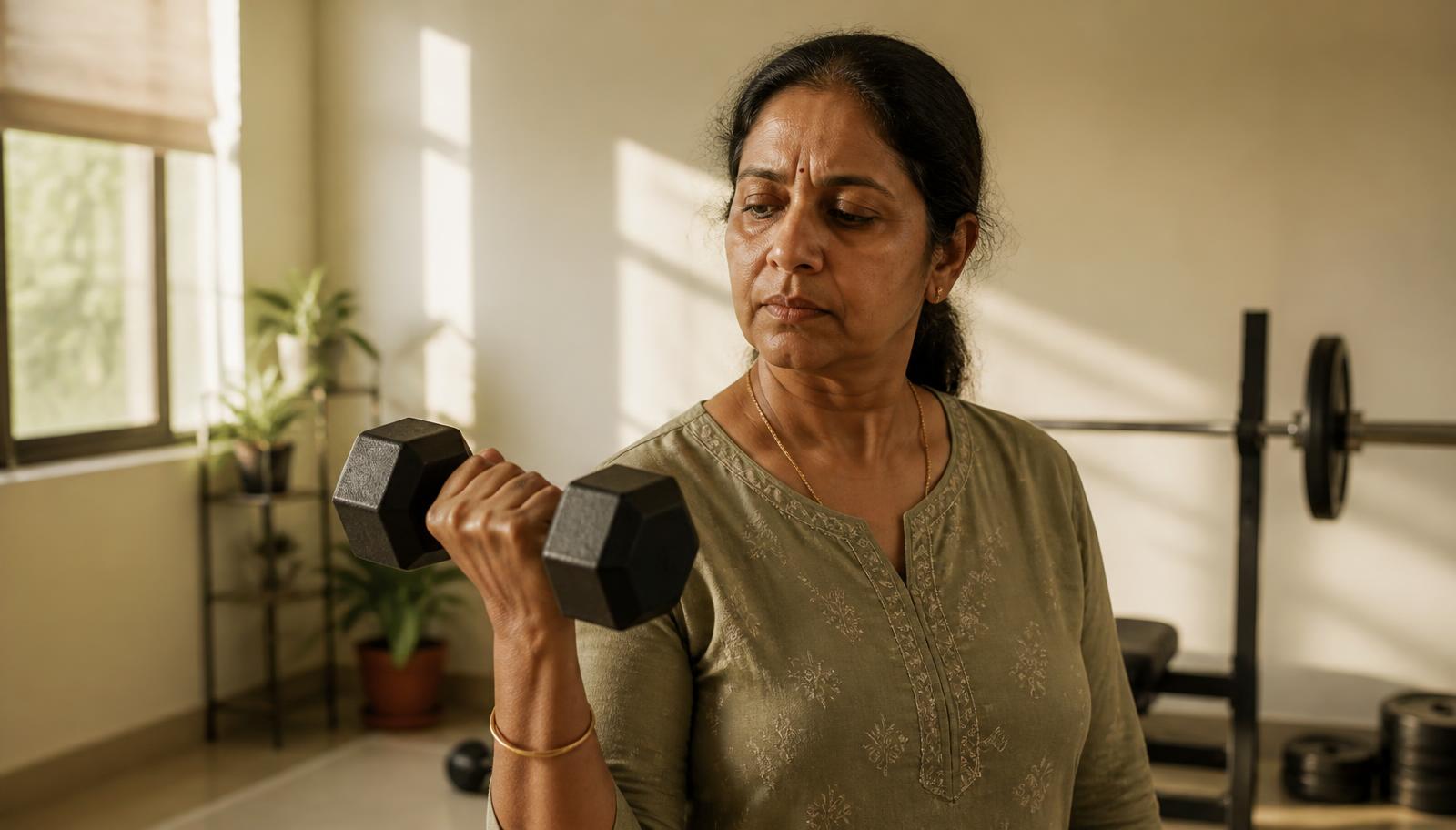
Women can lose a meaningful percentage of bone density in the years immediately around menopause. Estrogen was doing quiet structural work, and when it steps back, bone turnover tips toward loss.
Walking helps. Walking is not enough on its own for bone.
What bone responds to
Bone remodels in response to load and impact. That means:
- Resistance training with weight heavy enough that the last two or three repetitions are genuinely difficult. Two to three sessions a week.
- Compound movements (squats, hinges, presses, rows, carries) because they load the hip and spine, the sites that matter most.
- Impact, in small doses: hops, skips, stair climbing, brisk downhill walking, if your joints and pelvic floor are happy with it.
The part women get wrong
Three-kilo dumbbells for high reps are a lovely way to spend forty minutes and a poor way to build bone. The stimulus has to be a challenge. If you can do twenty comfortable reps, the weight is a warm-up, not a workout.
A minimum viable week
- Two 30-minute strength sessions: a squat pattern, a hinge pattern, a push, a pull, a carry.
- Daily walking, at whatever pace suits the day.
- Protein spread across meals so the training has something to build with.
If you're starting from nothing
Start with bodyweight and a single set. Add a set. Then add load. The goal for the first month is showing up twice a week, not choosing the perfect programme. Consistency built at a boring pace outlasts enthusiasm every time.
Please read: this is general wellness perspective from one woman to another, not medical or mental health advice, and not a substitute for knowing your own history. For anything urgent, or anything that worries you, please see a doctor or a licensed professional.
Was this helpful?
Ask Jess
Got something you can't ask anyone else?
Send it privately. Anonymously if you'd rather. Nothing is ever published without your say-so.
Ask a question